
Friendships are an important part of childhood. They provide opportunities for children to develop communication skills, build confidence, practice problem-solving, and experience a sense of belonging.
However, friendships can also be a significant source of stress.
Your child may come home upset because a friend didn't include them at recess, someone made an unkind comment, or a friendship dynamic suddenly changed.
As a parent, it's natural to want to step in and make things better.
While your support is important, friendship challenges also provide opportunities for children to develop the skills needed to navigate social relationships independently.
Why Friendship Challenges Can Feel So Big
Children are still developing their ability to understand different perspectives, interpret social interactions, and manage disappointment.

A situation that may seem relatively minor to an adult can feel significant to a child.
For example, not being invited to a playdate may lead a child to believe:
"My friends don't like me anymore."
Or seeing two friends whispering may lead them to assume:
"They must be talking about me."
These interpretations can contribute to feelings of rejection, anxiety, and insecurity, even when children don't have all the information about what happened.
4 Ways to Support Your Child
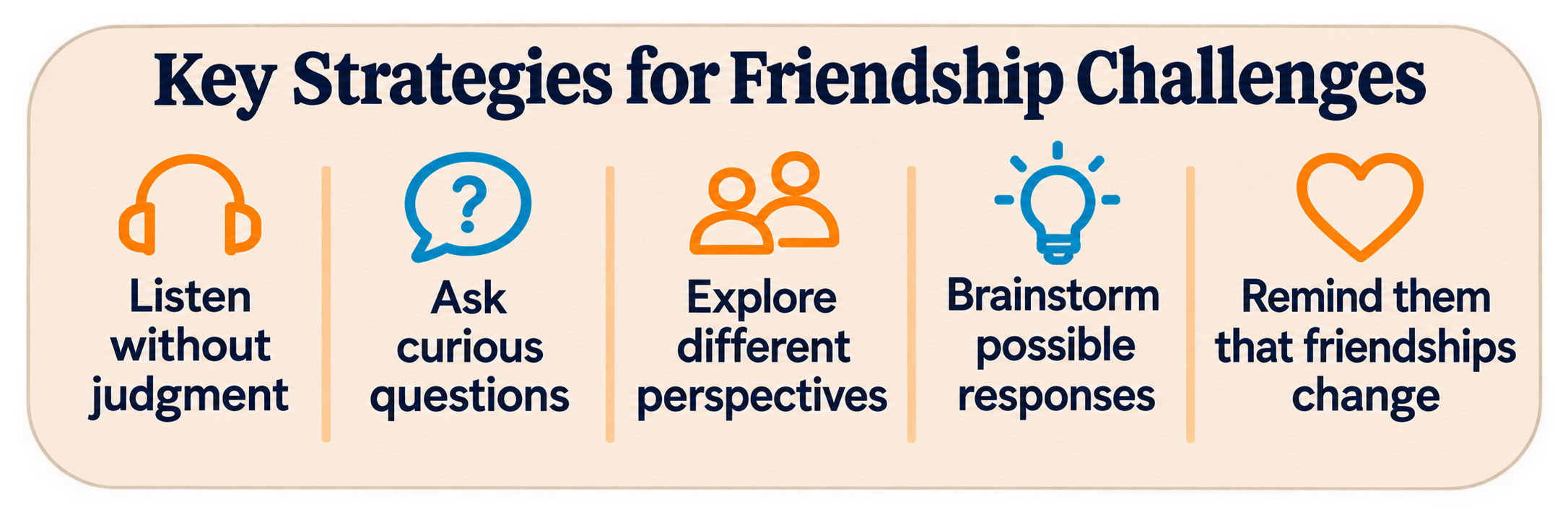
1. Acknowledge and Validate Their Feelings
When your child shares a difficult friendship experience, begin by listening.
Rather than immediately offering a solution or minimizing the situation, acknowledge how they feel.

For example:
"I can understand why you felt left out when your friends were playing together without you. That sounds disappointing."
This helps your child feel heard and creates an opportunity for a productive conversation.
2. Help Them Separate Facts From Assumptions
Children sometimes interpret social situations based on how they feel rather than what they know.
Help your child explore the difference.
You might ask:
"What do you know happened for a fact?"
"What are you guessing might have happened?"
"Is there another possible explanation?"
For example, if a friend didn't respond to a message, your child may assume the friend is upset with them.
You can help them recognize that there may be other explanations, such as the friend being busy or forgetting to respond.
The goal isn't to convince your child that everything is fine, but to encourage flexible thinking and reduce jumping to conclusions.
3. Encourage Problem-Solving
Instead of immediately telling your child what to do, involve them in identifying possible solutions.
Ask:
"What do you think you could try?"
"What might happen if you did that?"
"Is there another way you could handle the situation?"
For example, if your child feels excluded during recess, brainstorm different ways they could join a game, invite another child to play, or communicate how they're feeling.
This helps children develop confidence in their ability to manage social challenges.
4. Encourage New Connections
When children experience difficulties within a friendship group, they may become focused on repairing that particular relationship.
While maintaining friendships is important, encouraging connections with other peers can help children recognize that their social opportunities extend beyond one person or group.
Consider encouraging your child to:
Invite a different classmate to play.
Join an extracurricular activity.
Start a conversation with someone new.
Participate in group activities that match their interests.
Building multiple connections can support social confidence and reduce pressure on any single friendship.
When Should Parents Step In?
Not every friendship disagreement requires adult intervention.
Minor disagreements, misunderstandings, and changing friendship dynamics are common parts of childhood.
However, adult involvement may be necessary when there is repeated exclusion or bullying, threats, harassment, safety concerns, or a significant impact on your child's emotional well-being.
In these situations, collaborating with teachers, school counselors, or other appropriate adults can help ensure your child receives the support they need.
Building Social Confidence Takes Practice
Friendship challenges can be uncomfortable, but they also provide opportunities for children to develop important lifelong skills.
By listening, validating emotions, encouraging flexible thinking, and supporting independent problem-solving, parents can help children approach social situations with greater confidence.
The goal isn't to protect children from every friendship disappointment. It's to help them develop the skills to navigate relationships in healthy and meaningful ways.
Looking for additional support?
If your child is experiencing friendship difficulties, social anxiety, or challenges with confidence and self-esteem, therapy can provide support in developing social-emotional and problem-solving skills.
Alexa Wernick, LCSW, ADHD-CCSP, provides child and adolescent therapy in Tampa, Florida, with virtual services throughout Florida and New York.
Schedule a Free Phone Consultation
