
It's normal for children to experience anxiety. Whether they're preparing for a test, meeting new classmates, or trying an unfamiliar activity, feeling nervous is a natural part of growing up.
In fact, some anxiety can be helpful. It encourages children to prepare, pay attention, and recognize situations that require extra care.
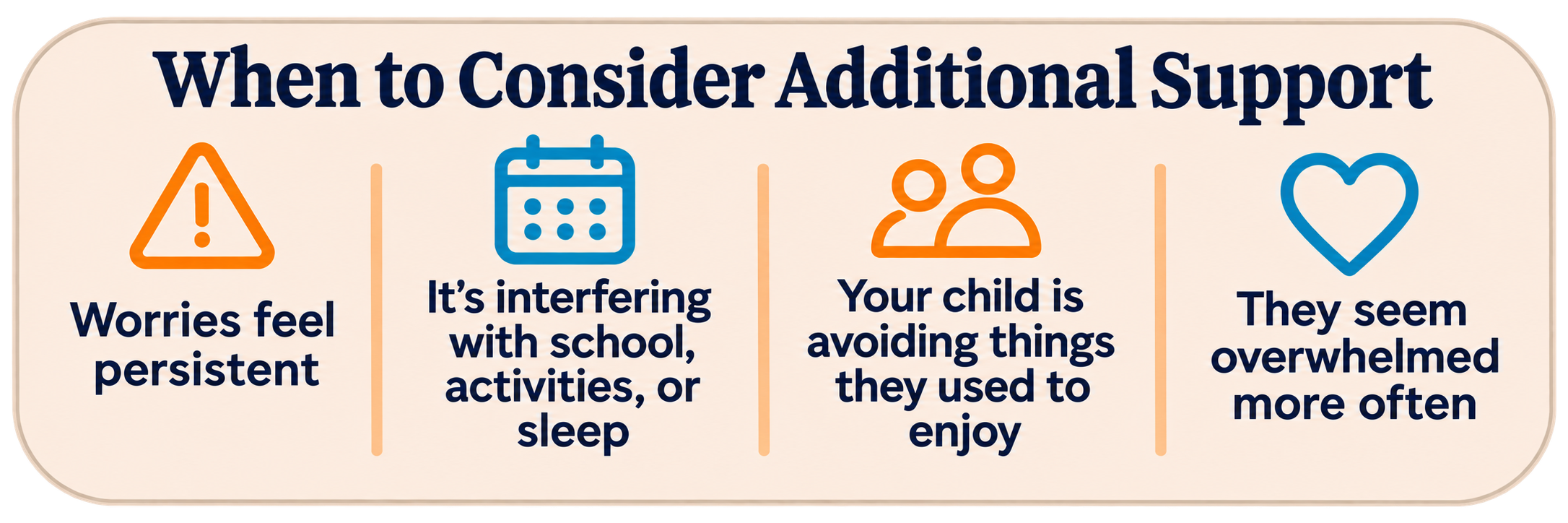
However, when anxiety begins interfering with a child's everyday life, it may be time to consider additional support.
What Does Anxiety Look Like in Children?

Anxiety doesn't always look like worry.
While some children openly express their fears, others communicate their anxiety through behaviors or physical symptoms.
Common signs may include:
Frequently asking "what if" questions.
Seeking repeated reassurance from parents.
Avoiding unfamiliar activities or social situations.
Complaining of stomachaches or headaches before stressful events.
Becoming upset when plans or routines change.
Struggling with perfectionism or fear of making mistakes.
Having difficulty separating from parents or attending school.
For some children, anxiety may also appear as irritability, frustration, or emotional outbursts.
These behaviors can be confusing for parents, particularly when their child seems calm in one environment but overwhelmed in another.
When Does Anxiety Become a Concern?
The presence of anxiety alone doesn't necessarily indicate that a child needs therapy.
Instead, consider how frequently anxiety occurs, how intensely your child experiences it, and whether it's interfering with daily activities.
For example, a child who feels nervous before a class presentation but participates anyway is having a different experience from a child who repeatedly refuses to attend school because they're afraid of presenting.
Additional support may be beneficial when anxiety:
Regularly interferes with school, friendships, or family activities.
Leads to increasing avoidance of everyday situations.
Causes significant distress or frequent emotional outbursts.
Requires ongoing reassurance to get through routine activities.
Prevents a child from participating in experiences they previously enjoyed.
You don't have to wait until anxiety becomes severe before seeking guidance.
How Parents Can Support an Anxious Child
1. Acknowledge Their Feelings
When children express anxiety, parents naturally want to reassure them that everything will be okay.
However, immediately dismissing a concern can unintentionally make children feel misunderstood.
Instead of saying, "There's nothing to worry about," try:
"I can see you're feeling nervous about tomorrow. Trying something new can feel uncomfortable."
This communicates that their emotions are understood and accepted.

2. Encourage Small Steps Toward Challenges
When children feel anxious, avoiding the situation often provides immediate relief.
However, repeated avoidance can make anxiety feel even bigger over time.
Rather than removing every uncomfortable situation, help your child approach challenges through manageable steps.
For example, if your child feels anxious about ordering food at a restaurant, you might begin by having them practice their order with you before encouraging them to speak directly to the server.
The goal is to build confidence through experience, not force a child into a situation they're unprepared to manage.
3. Focus on Their Ability to Handle Discomfort
Instead of promising that nothing uncomfortable will happen, emphasize your child's ability to cope if it does.
You might say:
"I know you're nervous, and I also know you can practice handling this feeling."
This helps children learn that feeling anxious doesn't automatically mean something is unsafe or impossible.
4. Recognize Their Effort
Praise your child when they take steps toward something that makes them nervous, regardless of the outcome.
For example:
"I know introducing yourself to someone new felt uncomfortable, and you did it anyway. That took courage!"
Recognizing effort reinforces confidence and encourages children to continue approaching challenges.
How Therapy Can Help
Therapy provides children with a supportive environment to better understand their anxiety and develop strategies for managing it.
Through evidence-based approaches, including Cognitive Behavioral Therapy (CBT), children can learn to recognize anxious thinking patterns, tolerate uncertainty, and gradually approach situations they've been avoiding.
Parent involvement is also important. Parents can learn how to respond to anxiety in ways that communicate empathy while encouraging independence and confidence.
The goal isn't to eliminate anxiety entirely. It's to help children feel more capable of managing it.
Looking for additional support?
Alexa Wernick, LCSW, ADHD-CCSP, specializes in supporting children and adolescents experiencing anxiety, perfectionism, and emotional regulation challenges.
She provides in-person therapy in Tampa, Florida, and virtual services throughout Florida and New York.
