
A crossed-out word, a missed goal, or a drawing that does not look quite right can feel unbearable to a child who wants to get everything perfect. What looks like overreacting may actually be fear of making mistakes.
Why Mistakes Feel So Big

Some children erase their work repeatedly, avoid trying something new, or become upset when they cannot do something perfectly. The fear of making a mistake can make even familiar tasks feel overwhelming.
Focus on Effort, Not Perfection
Notice what your child did rather than only whether they succeeded: “You tried two different strategies,” or “You stuck with a hard task.” Avoid making perfection the standard for praise.
When your child erases a drawing over and over, resist immediately fixing it. You might say, “It is hard when something does not look how you pictured it. Can we practice leaving one small mistake and seeing what happens?”
Model your own imperfect moments: “I made a mistake, and I can try again.”
Show Your Child That Mistakes Are Okay
Let your child hear you say, “Oops, I made a mistake. I can fix it,” or “I’m still learning.”
Practice low-stakes activities where mistakes are expected, such as drawing with your non-dominant hand.
Encourage More Helpful Self-Talk
Instead of “It has to be perfect,” practice “I can do my best and still make mistakes.” If a task feels too big, help your child identify the smallest possible first step.
Remind Your Child That Mistakes Don't Define Them
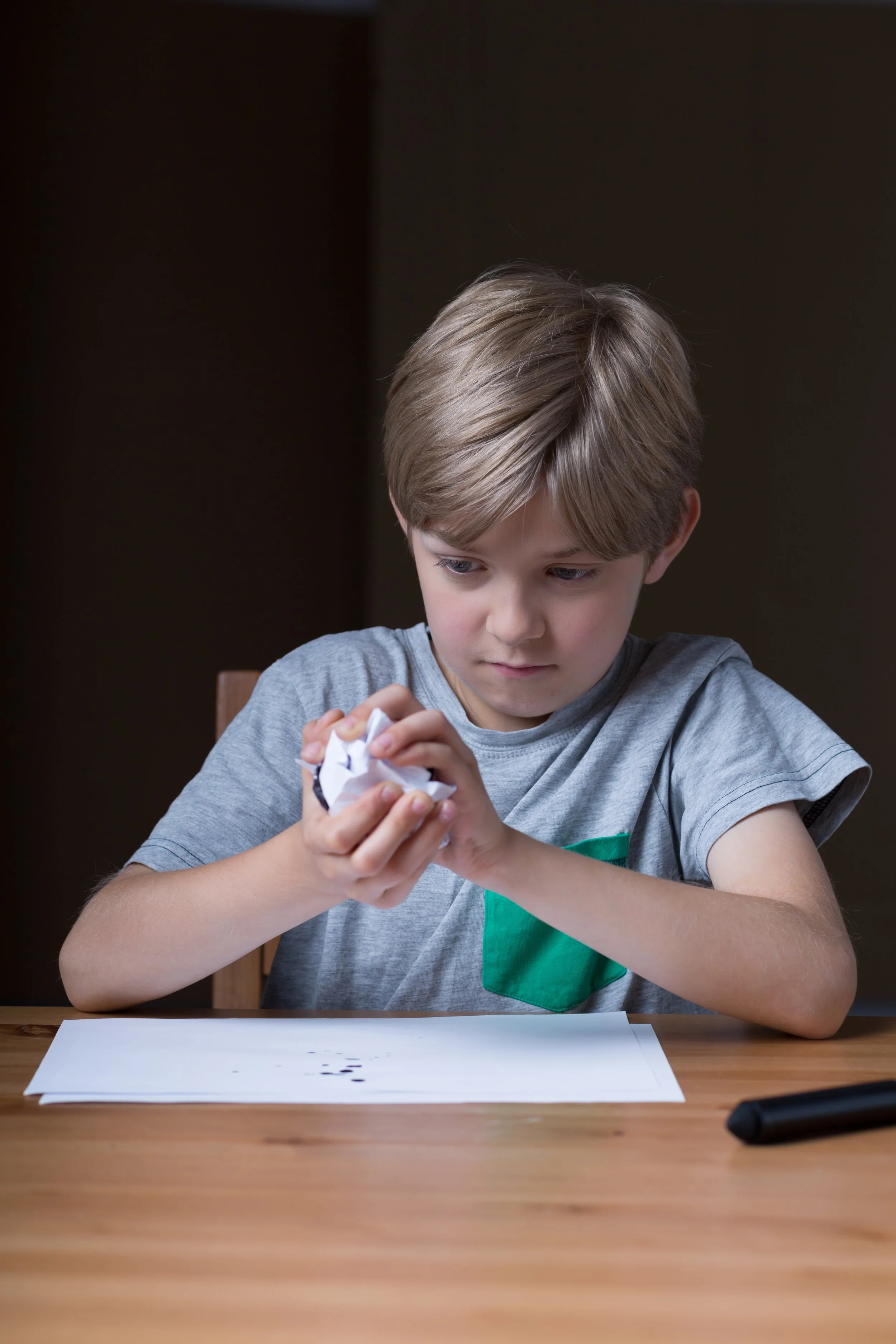
A child who crumples a drawing after one uneven line may believe that a mistake means they are not good at art. Acknowledge the disappointment, then gently widen the perspective: “You wanted it to look a certain way. Does one line change everything you created?”
Avoid insisting that the drawing is perfect; the goal is learning that imperfect work can still be worthwhile.
Practice Making Mistakes Together
Let your child hear you handle ordinary mistakes: “I forgot something at the store. That’s frustrating, but I can make another plan.” You can even do a fun drawing challenge where both of you intentionally make a mistake and continue. Keep it playful rather than turning it into a test of whether your child can stay calm.
Help Your Child Let Go of Perfect
For children who erase repeatedly or restart assignments, agree on a small, realistic goal: finish one paragraph without rewriting the first sentence, or leave one tiny drawing error as it is.
Praise flexibility rather than the finished product: “You noticed it wasn’t exactly how you wanted, and you kept going.”
If fear of mistakes causes significant avoidance or distress, additional support may be helpful.
Strategies to Try at Home
Normalize mistakes. Model saying: “That didn't go as planned, I can try again.”
Avoid perfection-focused praise. Notice persistence, flexibility, and willingness to practice.
Try small exposures to imperfection. Leave a minor drawing error or finish a sentence without rewriting it repeatedly.
Reflect on the outcome. Ask: “What happened when you kept going even though it wasn't perfect?”
The Takeaway
Perfectionism often softens when children learn that mistakes are uncomfortable but manageable, and that their worth is not determined by the outcome.
Looking for Additional Support?
At Alexa Wernick Psychotherapy, I support children, adolescents, and parents with practical, individualized strategies for everyday challenges.
