
Your child loses track of instructions, avoids homework, or seems restless at school. Is it ADHD, anxiety, or something else?
Because these experiences can overlap, the most helpful starting point is understanding what may be getting in the way.
Why They Can Look Alike
A child who seems distracted, forgetful, restless, or reluctant to begin schoolwork might be experiencing anxiety, ADHD, or both. From the outside, these behaviors can look very similar.
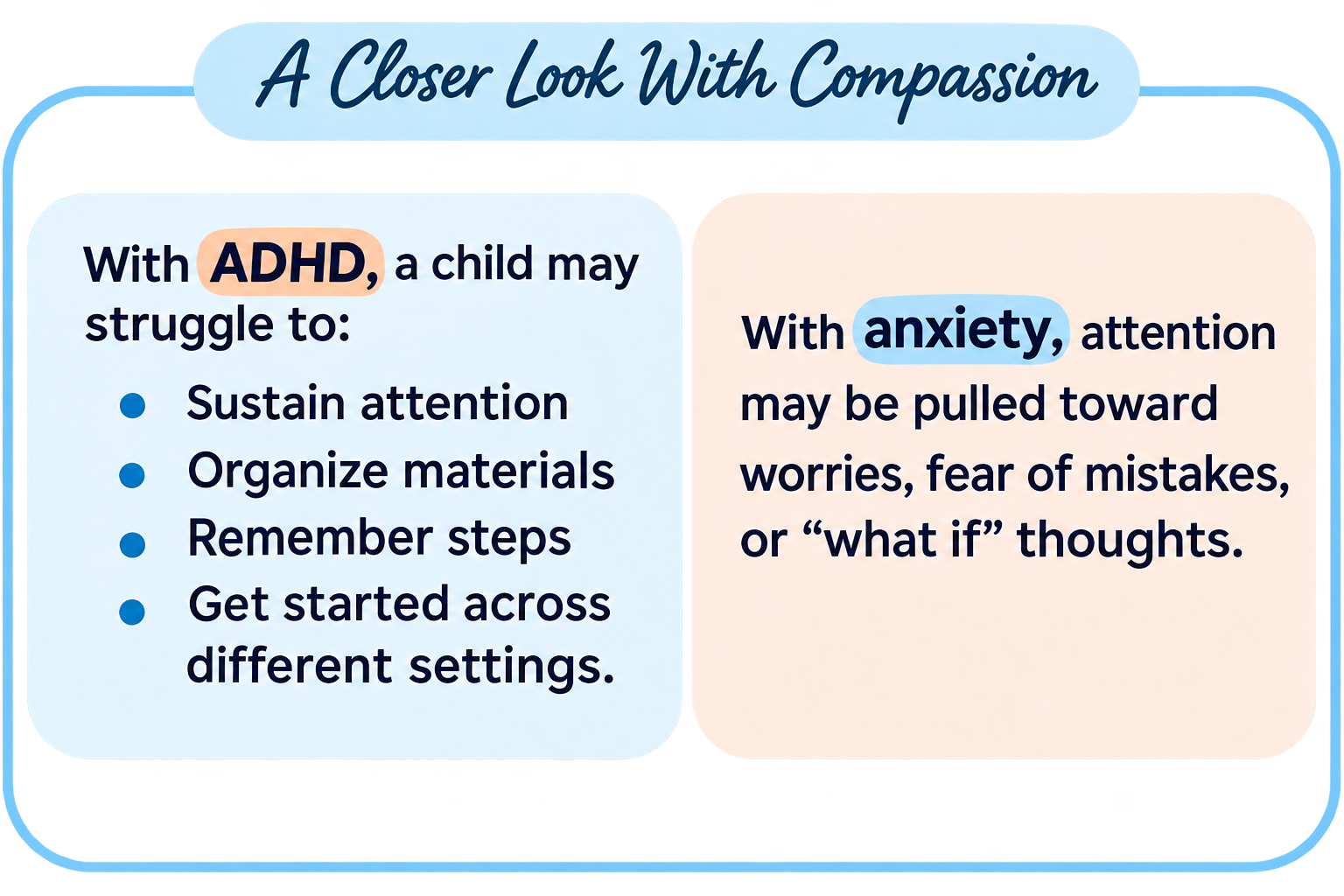
Examples
One child might not begin a worksheet because they cannot organize the first step; another might hesitate because they are afraid of getting an answer wrong.
Ahild who freezes before a test may be preoccupied with getting the answer wrong, while a child who frequently misplaces materials may need more support with organization.
Neither example is enough to diagnose a child.
Ask the teacher what they notice, and share specific examples with your pediatrician or a qualified clinician.
Look for Patterns, Not One Behavior
Notice when the difficulty happens, what your child says they are thinking, and whether the behavior changes with reassurance, structure, or a calmer environment.

Anxiety and ADHD frequently occur together, so it is not always an either-or question.
How Parents Can Help
Pay Attention to Patterns: Notice when forgetfulness, distraction, or difficulty starting tasks occurs. Does it happen across different activities, or primarily during stressful situations?
Ask Open-Ended Questions: Instead of asking, “Why weren’t you paying attention?” try, “What was going through your mind when it was hard to start?”
Keep Directions Simple: Use short, clear instructions, predictable routines, and supportive check-ins to help your child stay on track.
Provide Tools: Try written checklists, visual reminders, or breaking larger assignments into smaller, manageable steps.
Acknowledge Worries: If your child is afraid of making mistakes, validate their feelings while encouraging them to try and recognize when their work is good enough.
Avoid Negative Labels: Rather than assuming your child is lazy or unmotivated, consider what skills or emotions may be contributing to their difficulties.
Seek Support When Needed: If challenges consistently interfere with school, friendships, or daily life, a qualified professional can help identify contributing factors and appropriate strategies.
When an Evaluation May be Helpful
Consider discussing concerns with your child’s pediatrician or an appropriately qualified clinician when difficulties persist, appear across settings, or affect learning, relationships, or confidence. Teacher observations and concrete examples from home can help.
An evaluation should consider developmental history, school experiences, sleep, stress, and possible co-occurring concerns rather than relying on stereotypes about boys or girls.
Strategies to Remember
Observe patterns. Notice whether difficulties appear during routines, schoolwork, social situations, or across settings.
Ask curious questions. Try: “Were you worried about getting it wrong, or was it hard to remember the steps?”
Add external supports. Use short instructions, visual checklists, and a clear first step.
Seek clarification when needed. Share concrete examples with a pediatrician or qualified evaluator rather than guessing from one behavior.
Key Takeaway
Anxiety and ADHD can look similar and can also occur together. Looking for patterns, rather than drawing conclusions from one behavior, is a useful first step.
Looking for Additional Support?
At Alexa Wernick Psychotherapy, I support children, adolescents, and parents with practical, individualized strategies for everyday challenges.
Schedule a free phone consultation.
