
Have you ever asked your child to put their shoes on, grab their backpack, and meet you at the door, only to find them ten minutes later doing something completely different?
Or maybe your child knows they have homework but struggles to get started.
These everyday challenges may be related to something called executive functioning.
What Is Executive Functioning?
Executive functioning refers to a set of brain-based skills that help us manage everyday tasks.
Think of executive functioning as the manager of your child's brain. It helps them remember directions, make plans, stay focused, manage emotions, and complete tasks.
These skills develop gradually throughout childhood, meaning children often need reminders, guidance, and opportunities to practice.
What Does Executive Functioning Look Like?
Executive functioning includes several important skills:
Working Memory: Remembering information long enough to use it. For example, forgetting two of the three directions you just gave.
Task Initiation: Getting started on something. For example, spending 15 minutes avoiding homework instead of beginning.
Organization: Keeping track of belongings and responsibilities. For example, completing homework but forgetting to turn it in.
Planning: Figuring out what needs to happen and in what order. For example, struggling to break a school project into smaller steps.
Emotional Regulation: Managing reactions to frustration or disappointment. For example, becoming overwhelmed when homework feels difficult.
Flexible Thinking: Adjusting when plans or expectations change. For example, becoming upset when the usual routine is different.
Impulse Control: Pausing before acting. For example, interrupting conversations or blurting out answers.
Why Does My Child Struggle With These Skills?
Executive functioning skills are still developing throughout childhood and into early adulthood.
Some children naturally need more support than others. Children with ADHD often experience executive functioning difficulties, but children without ADHD can struggle with these skills, too.
Anxiety, stress, and fatigue can also make it harder for children to stay organized, focused, and regulated.
It's important to remember that struggling with executive functioning doesn't necessarily mean your child is being lazy, careless, or intentionally refusing to listen.
Sometimes children know what they're supposed to do but struggle to put that knowledge into action.
How Can Parents Help?
The good news is that executive functioning skills can improve with practice and support.
1. Break directions into smaller steps.
Instead of giving four directions at once, start with one or two.
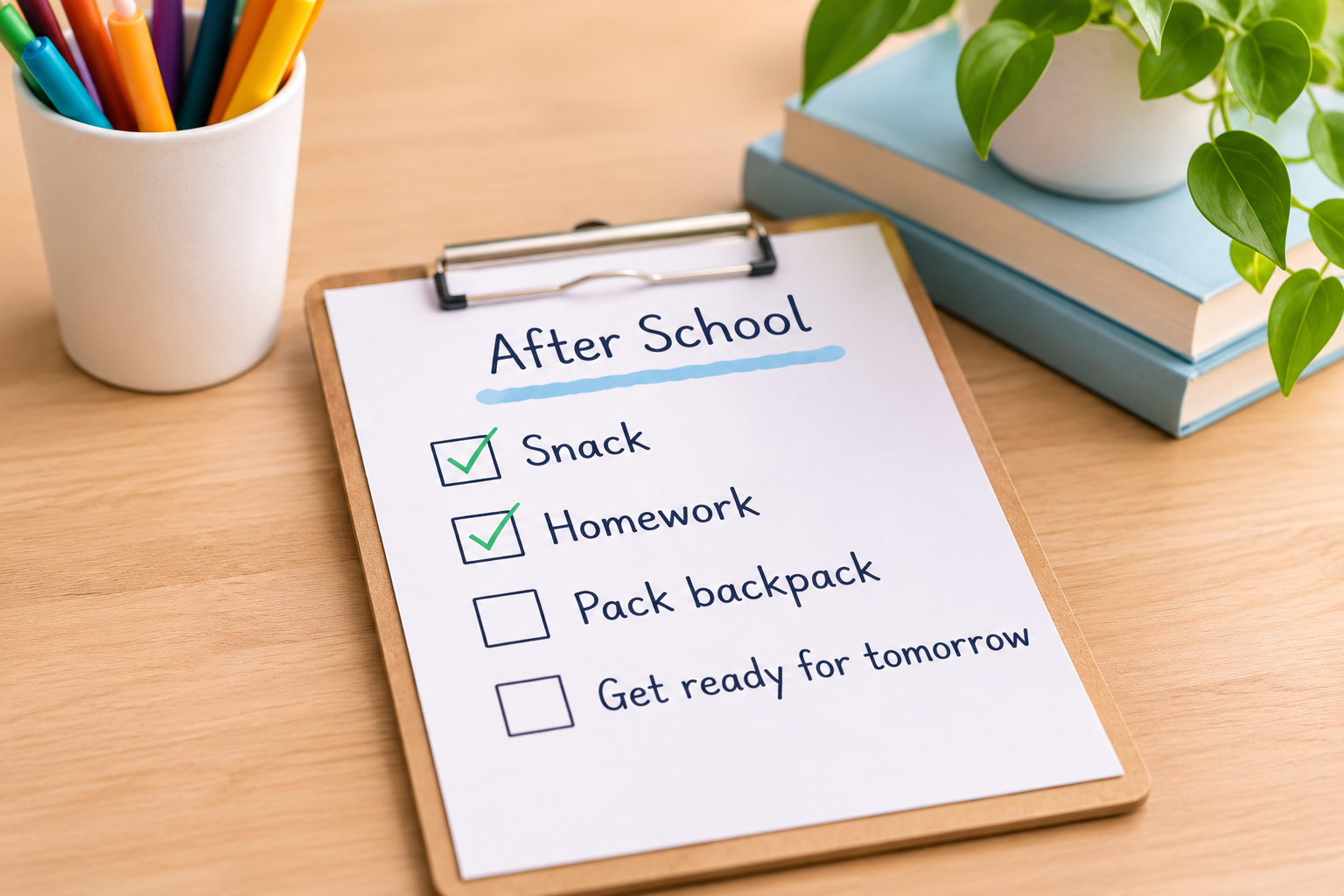
2. Use visual reminders.
Checklists, calendars, and written routines can help children remember responsibilities more independently.
3. Help your child get started.

Sometimes starting is the hardest part. Try saying, "Let's do the first question together, and then you can try the next one."
4. Create consistent routines.
Predictable morning, homework, and bedtime routines reduce the amount of planning and remembering your child needs to do.
5. Praise their effort and strategies.
"I noticed you checked your backpack before leaving. That's a great way to make sure you have everything!"
6. Focus on one skill at a time.
Rather than working on everything at once, choose one area to practice together.
The Takeaway
Executive functioning skills help children manage everyday responsibilities, from remembering their homework to handling frustration when things don't go as planned.
These skills take time, practice, and support to develop.
The goal isn't to do everything for your child. It's to give them the tools they need to gradually become more independent.
Looking for Additional Support?
At Alexa Wernick Psychotherapy, I help children and adolescents strengthen executive functioning skills, build confidence, and develop practical strategies for home and school. I also offer parent coaching to help families support their child's growing independence.
Schedule a Free Phone Consultation
In-person in Tampa · Virtual throughout Florida & New York
